Modern Vector Templates for Teamwork & Strategy Design
When you are building a digital presence, whether it is a mobile app, a corporate landing page, or a pitch deck, the difference between "amateur" and "professional" often comes down to visual cohesion. I have spent years wrestling with stock photos that never quite fit the layout or clip art that looks like it was drawn in 1998. That is why finding the right Modern Vector Illustration Concepts is a game-changer. These assets aren't just random graphics; they are a cohesive visual language designed to communicate complex ideas like business strategy, teamwork, and analytics without overwhelming your audience.
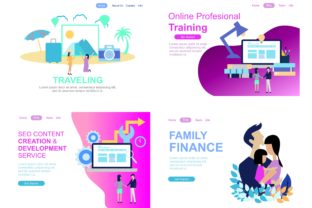
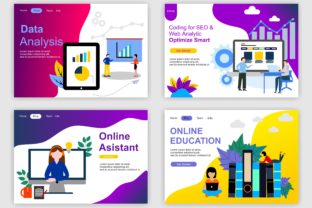
The specific package we are looking at here focuses on clean, contemporary aesthetics. We are talking about flat design principles with subtle gradients, geometric shapes, and a human-centric approach. The character designs are abstract but relatable—figures collaborating on a whiteboard, analyzing data charts, or brainstorming ideas. This style is incredibly versatile because it sits right in the sweet spot between professional seriousness and friendly approachability. It signals that your brand is modern, tech-savvy, and organized, without feeling cold or robotic.
The Anatomy of the Design: Style and Appeal
The visual personality of these Modern Vector Illustration Concepts is defined by clarity. In a world of visual noise, these templates use negative space effectively to let the content breathe. The color palettes usually involve soft pastels or bold, contrasting primaries that draw the eye to key actions—like a "Sign Up" button or a key statistic on a graph. This is crucial for web design and mobile website development, where screen real estate is limited and you need to guide the user's eye instantly.
What makes these specific Web Page Design Templates stand out is their modularity. Because they are vectors, they are infinitely scalable. You can take a small icon representing "analytics" and blow it up to be a hero image on a 4K monitor without losing a single pixel of sharpness. This scalability is vital for maintaining a consistent brand identity across different mediums. Whether you are printing a massive banner for a trade show or shrinking an icon down for a mobile favicon, the lines remain crisp and the message remains clear.
Practical Application: From Strategy to Screen
So, where do these assets actually fit into your workflow? The applications are broader than you might initially think. Obviously, they are perfect for web design. If you are building a SaaS product landing page, you can use these illustrations to explain your features visually. Instead of a wall of text explaining your "Team Collaboration" feature, you drop in a vector of people connecting nodes. It communicates the value proposition instantly.
However, the utility extends far beyond the browser. I have seen these types of design assets work wonders in:
- Editorial Design: Modern magazines and corporate brochures need visuals that aren't cheesy. These vectors add a sophisticated, editorial touch to layout spreads discussing market trends or HR policies.
- Presentation Design: We all know "Death by PowerPoint." Using these illustrations as visual anchors in your slides helps maintain audience engagement during business strategy meetings.
- Social Media Graphics: The "thumb-stopping" power of a clean, colorful vector is undeniable on Instagram or LinkedIn. They stand out amidst the clutter of user-generated content.
- Mobile App UI: For empty states (when a user has no data yet) or onboarding screens, these illustrations provide a friendly, welcoming user experience.
The versatility of these files—coming in both JPG and EPS formats—means you aren't locked into a single piece of software. The JPGs are ready to go for quick mockups or web use, while the EPS files are the heavy lifters. They allow you to edit anchor points, change color schemes to match your specific brand identity, and combine elements to create custom compositions.
Integrating Assets into Your Workflow
One of the biggest hurdles with design assets is the "Frankenstein" effect—where a website looks like it was assembled from five different stock libraries. To avoid this, you need to treat these Modern Vector Illustration Concepts as a system, not just a collection of pictures.
Start by establishing a color story. Even though these vectors come with default colors, the EPS files allow you to swap them out. Pick 3 to 5 brand colors and apply them consistently across all the illustrations. If the "Teamwork" graphic uses blue shirts, make sure the "Analytics" graphic uses the same shade of blue for its charts. This consistency creates a subconscious feeling of order and professionalism for the viewer.
Next, consider your typography pairing. This is where modern typography meets illustration. These vectors generally have a clean, geometric feel. To complement that, you should look for a sans serif font with a similar x-height and geometric construction. A font like Montserrat or Poppins often pairs beautifully with this style of illustration. Avoid overly ornate script fonts or heavy serif fonts unless you are intentionally creating a high-contrast editorial look. The goal is visual harmony between your text and your graphics.
Choosing the Right Visuals for Your Project
Before you hit download, you need to evaluate the fit. Look at the "personality" of the illustrations. Do they look too corporate? Or perhaps too playful? For a serious business strategy consultancy, you might want figures in suits. For a tech startup, hoodies and casual postures might be better. Review the included files to ensure the scenarios depicted match your actual business activities.
Readability is also key, even with images. If you are overlaying text on top of these illustrations (a common trend in hero sections), ensure there is enough contrast. You might need to add a semi-transparent overlay or a blur effect behind your headline so the text remains legible. This is a practical step that many beginners miss, leading to a homepage that looks pretty but is impossible to read.
Finally, check the licensing. Since you mentioned these are for both personal and commercial projects, that is a massive plus. However, always double-check the terms. Can you use them in a template you intend to sell? Can you use them in a logo? Usually, stock vectors cannot be trademarked as logos, but they are fine for website headers and marketing collateral. Knowing these boundaries protects your business down the line.
The Takeaway
In the end, Web Page Design Templates for Teamwork, Business Strategy, Analytic and Presentation are more than just decoration. They are communication tools. In the fast-paced world of digital marketing and mobile website development, you have about three seconds to convince a visitor to stay. High-quality, relevant vector graphics convey competence and clarity instantly. By integrating these Modern Vector Illustration Concepts thoughtfully—matching them with the right colors, fonts, and layout structure—you elevate your project from a simple webpage to a compelling digital experience.
Whether you are a small business owner trying to look bigger than you are, or a designer trying to speed up your production process, these assets provide the visual shorthand you need. They bridge the gap between abstract business concepts and tangible visual reality, helping you build trust with your audience before they even read a word of your copy.